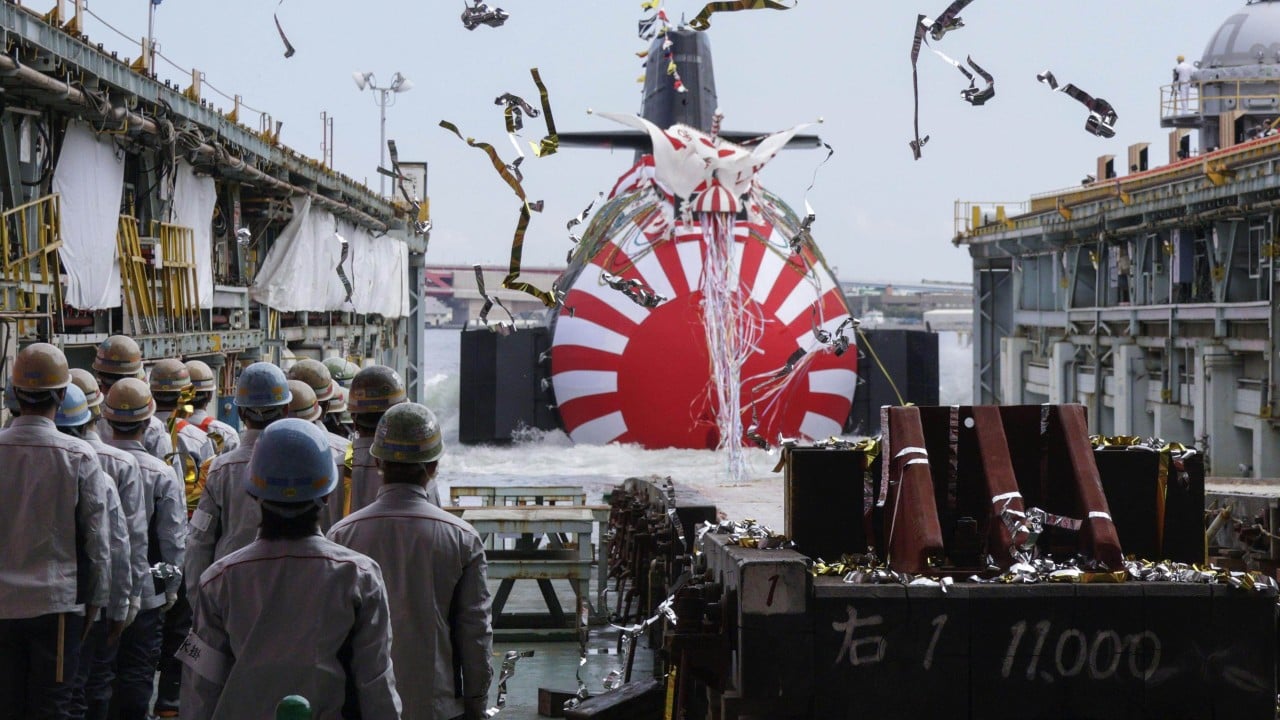
Japan's prime minister said Tokyo will seriously consider nuclear-powered submarines, an idea dividing the ruling coalition. Zelenskyy said Ukraine has waited nearly a month for US approval of Patriot and NASAMS missile deliveries. India's Defence Acquisition Council cleared Army purchases, and Algeria is set to send troops to Niger.
The "N-word," long considered taboo in Japan for decades, is finally entering strategic discussions. Tokyo is now considering formal debates on acquiring nuclear-powered submarines for the Japan Maritime Self-Defence Force. Such a move could challenge longstanding post-World War II constraints and mark a significant shift in Japan's defense policy. While the Japanese parliament discusses and conducts a cost-benefit analysis of building SSNs—especially given their highly advanced conventional submarine fleet—the move could help Tokyo project power throughout the Indo-Pacific and enhance collective deterrence within the Quad alongside India, the US, and Australia. Australia's acquisition of SSNs under AUKUS will further augment this posture, helping to relieve pressure on the Indian Navy in its own neighbourhood by forcing the Chinese PLA Navy to disperse its assets to secure critical chokepoints like the Strait of Malacca. Furthermore, a robust intelligence-sharing and Anti-Submarine Warfare framework could be developed among these allies.
Ukrainian President Volodymyr Zelenskyy has stated that Kyiv is still waiting for US sign-off on a deal for Patriot interceptors and NASAMS missiles. These interceptors have become indispensable for Ukraine, as they are among the few systems capable of intercepting incoming Russian missiles and projectiles. This American delay highlights the immense political leverage Washington holds over its weaponry; even when European allies possess these systems or are willing to fund them, transfers cannot proceed without U.S. consent. This situation provides a strong impetus for both Kyiv and India to build indigenous defence industries—fostering strategic autonomy and enabling a shift away from legacy Russian and Western systems that come with stringent conditions.
The recent clearing of proposals worth $22 billion by India's Defence Acquisition Council (DAC) grants the Acceptance of Necessity (AoN) for the potential acquisition of additional K9-Vajra self-propelled howitzers, High Mobility Vehicles (HMVs), Very Short Range Air Defence Systems (VSHORADs), Light Multi-Role Helicopters, and Reconnaissance and Loitering Drones, among other platforms. A successful procurement following this step will help the Indian Armed Forces bridge critical capability gaps in drone warfare, significantly boost logistics through HMVs and multi-role helicopters, and strengthen the Indian Army's Artillery Corps.
Algeria’s historic deployment of troops to Niger—its first foreign military mission since 1973—aims to protect its state-owned oil company, Sonatrach, and its vital energy assets, including the Kafra oil block and the Trans-Saharan Gas Pipeline. Approved by parliament, the deployment secures porous borders against Sahel militants while positioning Algeria as a key regional security guarantor.
1Japan reopens debate on nuclear-powered submarines
Prime Minister Sanae Takaichi told parliament on October 14 that Japan will seriously consider nuclear-powered submarines for the Maritime Self-Defence Force in a concrete and realistic manner. The idea has long been taboo and is dividing the ruling coalition.
Why it matters: The debate comes as China shows its naval power across the Pacific and bilateral tensions run high. Tokyo is due to revise its core security documents by the end of the year.
2Ukraine still waiting for US sign-off on Patriot and NASAMS missiles
President Zelenskyy said Ukraine has waited nearly a month for Defense Secretary Pete Hegseth's signature on the delivery of missiles for Patriot and NASAMS air defence systems. He said the matter will be discussed with the US side, and Kyiv is also talking to other partners.
Why it matters: The delay affects Ukraine's supply of interceptors for its air defence systems. Kyiv is also approaching other partners.
3India's DAC clears vehicles, helicopters, guns and drones for the Army
The Defence Acquisition Council, chaired by Defence Minister Rajnath Singh on 26 October 2026, approved proposals for the Indian Army. According to the report's headline, these cover high mobility vehicles, light multi-role helicopters, gun systems and drones.
Why it matters: The approvals cover mobility, aviation, artillery and unmanned systems, which shows where Army procurement is being directed.
Algeria is set to deploy troops to Niger, its first foreign deployment since 1973. The troops are expected to protect energy facilities in northern Niger, near the Libyan border.
Why it matters: The move marks a departure from nearly five decades without Algerian troops abroad. It also shows the security importance of energy infrastructure in the border area with Libya.